
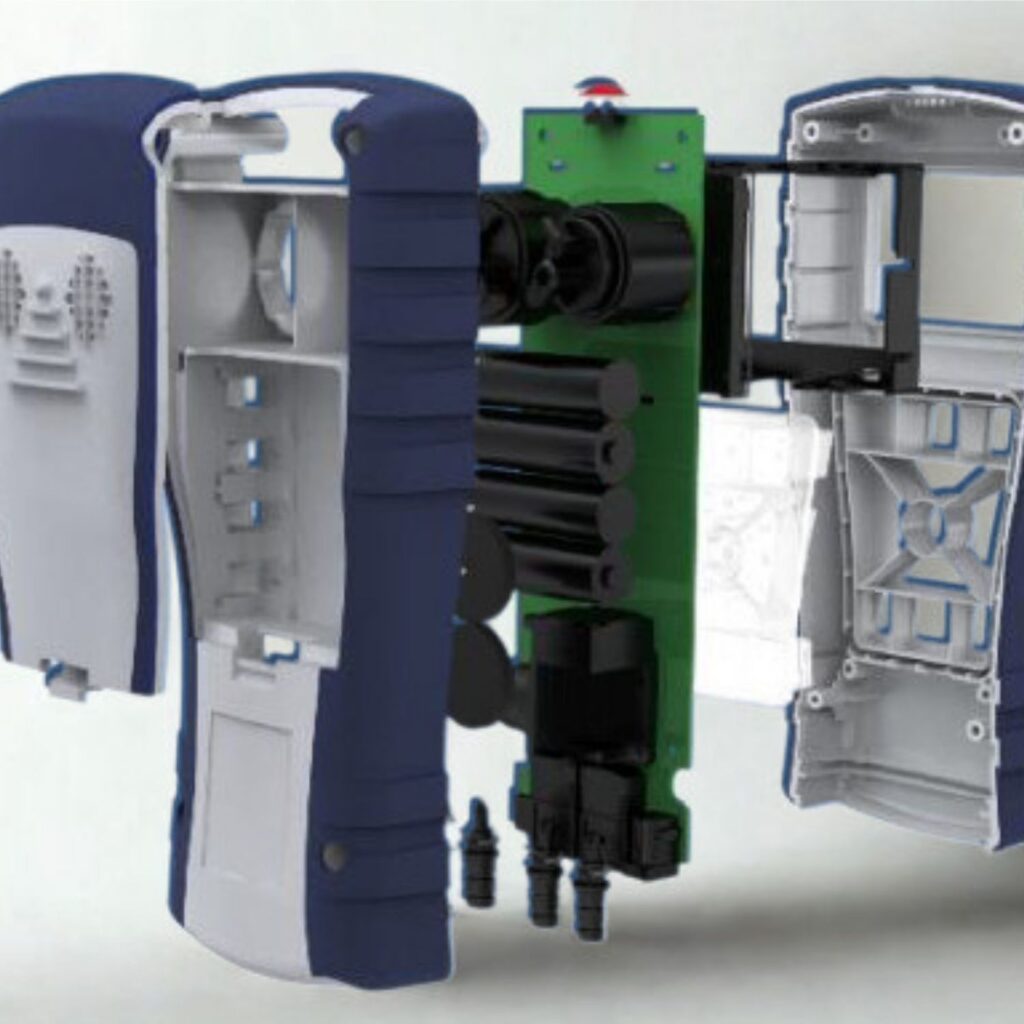
Many teams default to thinking custom plastic parts are straightforward. You design it, send out the file, get a tool made, and parts show up a few weeks later.
It’s common to assume that if the part looks right on a screen, it will mold correctly in production.
In our experience, this is where problems start.
Custom plastic parts, especially injection-molded components, are not just about shape. They are about how that shape performs in tooling, material flow, finishing, assembly, shipping, and real-world use. When those factors are overlooked, the result is higher costs, longer timelines, and frustration on both sides.
Here are the most common mistakes we see, and what they really mean for your business.
The Assumption That a CAD File Is “Production-Ready”
It’s common to assume that once engineering finishes a 3D model, the hard part is done.
What often gets overlooked is that designing a part and designing a moldable part are not the same thing.
Wall thickness, draft angles, rib placement, material shrink rates, and parting lines all affect whether a part fills properly, ejects cleanly, and maintains consistent dimensions. A design that works in theory can require expensive tool revisions if it was not developed with manufacturing in mind.
For your business, this means:
- Delays while tooling is modified
- Unexpected engineering change costs
- Missed launch dates
Design for manufacturability is not about changing your product vision. It is about protecting it. A collaborative design process helps maintain your design intent while ensuring the part can be produced efficiently and consistently at scale.
Focusing Only on Piece Price
Another common mistake is evaluating suppliers based primarily on piece price.
On paper, a lower per-part cost looks like a win. But piece price is only one part of total cost.
What often gets overlooked is:
- Tool longevity
- Scrap rates
- Secondary operations
- Finishing durability
- Inventory and logistics costs
- Lead time reliability
A lower upfront quote can lead to higher long-term costs if parts require rework, fail cosmetic inspections, or create assembly challenges downstream.
For many businesses, the real risk is not paying a few cents more per part. It is paying for production disruptions, brand damage, or rushed redesigns later.
A cost-effective solution is one that performs consistently over the life of the product, not just one that wins the initial quote comparison.
Treating Manufacturing Like a Vendor, Not a Partner
It’s common to assume a molder’s job starts when the PO is issued.
In reality, the most successful product launches happen when manufacturing is involved earlier.
At PacTec, for example, our team works with customers during design, material selection, and prototyping to ensure the product is optimized before it reaches tooling . That upfront collaboration helps reduce redesign cycles and supports smoother production ramp-ups.
When manufacturing is treated purely as a transactional supplier, communication tends to be reactive. Problems are discovered later, and solutions become more expensive.
When manufacturing is treated as a strategic partner, you gain:
- Early feedback on risk areas
- Material recommendations based on real-world performance
- Guidance on finishing and branding
- More predictable timelines
That partnership mindset can significantly reduce time to market and protect margin.
Overlooking Finishing, Branding, and Assembly
Many teams focus heavily on the molded base part and assume everything else is secondary.
But for many products, finishing and branding are what customers see first.
Screen printing, pad printing, painting, hot stamping, textured surfaces, and decorative trim all affect brand perception. So do small functional components like buttons, ports, and vents.
In our experience, this can lead to disconnects when finishing is considered too late in the process. A part may mold perfectly but require adjustments to accommodate graphics, overlays, or assembly processes.
It is also common to underestimate the value of integrated assembly. When molding, finishing, labeling, and assembly are coordinated under one roof, supply chains become simpler and more predictable .
For growing companies, that integration can reduce internal labor demands and streamline logistics.
What to Do Differently
If you are developing custom plastic parts, here are a few practical takeaways:
- Involve your injection molding partner early.
Early collaboration reduces surprises and protects your timeline. - Evaluate total cost, not just piece price.
Consider tool design, quality control, finishing durability, and logistics support. - Ask how your part will behave in production.
Understand material selection, shrink rates, and long-term performance in your environment. - Think beyond the base molding.
Plan for finishing, branding, assembly, and packaging from the beginning. - Choose a partner structured to support your growth.
Integrated engineering, production, finishing, and inventory planning can make scaling far more manageable .
Custom plastic parts are not just components. They protect electronics, carry your brand, shape user experience, and influence how customers perceive your product.
It’s common to assume injection molding is simply a manufacturing step. In reality, it is a strategic decision that affects cost, speed, quality, and long-term scalability.
When approached thoughtfully, with the right partner and a clear understanding of tradeoffs, custom plastic parts become an advantage rather than a risk.
If you are in the early stages of development or reevaluating an existing product, this is the right time to step back and ask: are we designing just for appearance, or are we designing for production success?