
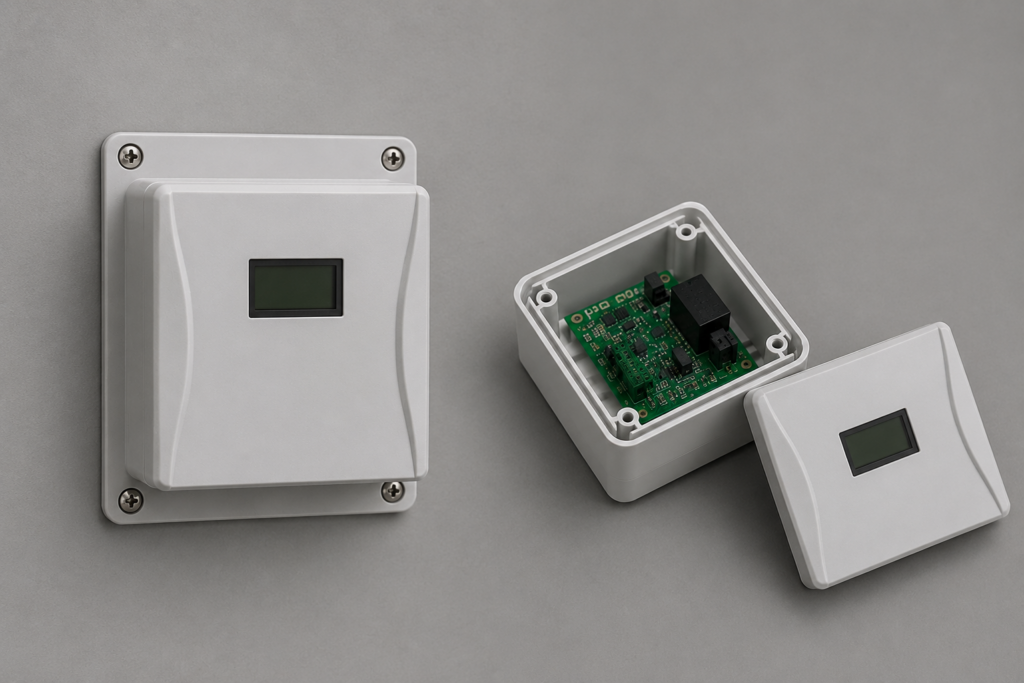
Whether it’s installed on a job site, mounted to industrial equipment, or used in outdoor consumer products, an outdoor plastic enclosure has one primary job: protect what’s inside.
Many teams default to focusing on the electronics or mechanical components first. What often gets overlooked is that the enclosure itself plays a major role in product performance, reliability, and customer perception. A poorly designed enclosure can lead to premature failures, warranty claims, costly redesigns, and a product that simply doesn’t hold up in real-world conditions.
The good news is that many of these challenges can be addressed early in the design process.
Why Outdoor Enclosures Face Different Challenges
Unlike products used indoors, outdoor enclosures are exposed to changing weather, temperature swings, sunlight, moisture, dirt, and physical impacts. Even products that spend only part of their life outdoors need to withstand conditions that can accelerate wear over time.
Designing for these environments isn’t about making an enclosure thicker or heavier. It’s about selecting the right materials, considering how the product will be used, and designing features that help protect internal components while supporting efficient manufacturing.
5 Features Every Outdoor Plastic Enclosure Should Include
1. Material That Matches the Environment
Material selection is one of the most important decisions in any enclosure project.
Some plastics offer excellent impact resistance, while others perform better in high temperatures or prolonged UV exposure. Choosing the right material depends on where and how the product will be used.
Questions to consider include:
- Will the product remain outdoors year-round?
- Will it experience direct sunlight?
- Could it be exposed to chemicals or cleaning solutions?
- Will it encounter repeated impacts or vibration?
Selecting an appropriate material early can improve durability while helping avoid unnecessary costs from over-engineering.
2. Protection Against Moisture and Contaminants
Rain, dust, humidity, and debris can all affect the performance of sensitive electronics.
Good enclosure design considers how moisture might enter through seams, openings, connectors, or mounting points. Depending on the application, features such as gasket interfaces, carefully designed mating surfaces, and appropriate sealing strategies may be incorporated to help protect internal components.
Thinking through these details during development is often much easier than trying to solve problems after production begins.
3. UV Resistance for Long-Term Appearance
Sunlight affects more than just color.
Over time, ultraviolet exposure can cause certain plastics to fade, discolor, or become brittle. If appearance is an important part of your brand, selecting UV-stable materials or finishing processes can help your product maintain its appearance throughout its service life.
This is particularly important for products that represent your brand in commercial or consumer environments.
4. Designed for Manufacturing
A great enclosure isn’t just functional. It should also be designed to manufacture efficiently.
Features such as wall thickness, ribs, snap fits, mounting bosses, and draft angles all influence how consistently a part can be molded. Small design improvements made early can reduce tooling complexity, shorten production cycles, and improve overall part quality.
In our experience, involving manufacturing expertise during the design phase often helps identify opportunities that improve both performance and cost.
5. Finishes That Support Both Performance and Branding
An outdoor enclosure often serves as the face of your product.
Textures, colors, logos, decorative trim, and printed graphics all contribute to how customers perceive quality. At the same time, these finishes need to withstand the environment they will operate in.
Choosing finishing methods that balance appearance with durability helps ensure your product continues looking professional throughout its lifecycle.
Why Material Selection Matters
No single plastic is the best choice for every application.
The right solution depends on balancing several factors, including:
- Environmental exposure
- Mechanical requirements
- Product appearance
- Expected product life
- Manufacturing cost
- Production volume
Working through these tradeoffs early helps avoid costly redesigns while ensuring the final product meets both functional and business objectives.
Designing for Long-Term Reliability
Outdoor products rarely fail because of one major design mistake.
Instead, reliability is usually the result of hundreds of thoughtful design decisions working together. Material selection, enclosure geometry, manufacturing processes, finishing methods, and assembly techniques all contribute to the product’s long-term performance.
When these decisions are made collaboratively, products are often easier to manufacture, more consistent in quality, and better prepared for real-world use.
How PacTec Helps
At PacTec, we work with customers early in the product development process to design custom injection molded enclosures that balance performance, manufacturability, appearance, and cost. Our team supports material selection, design for manufacturing, finishing options, and production planning to help customers move confidently from concept to production.
Every application is different, but the goal remains the same: create an enclosure that protects your product, supports your brand, and performs reliably in the environments where it matters most.