
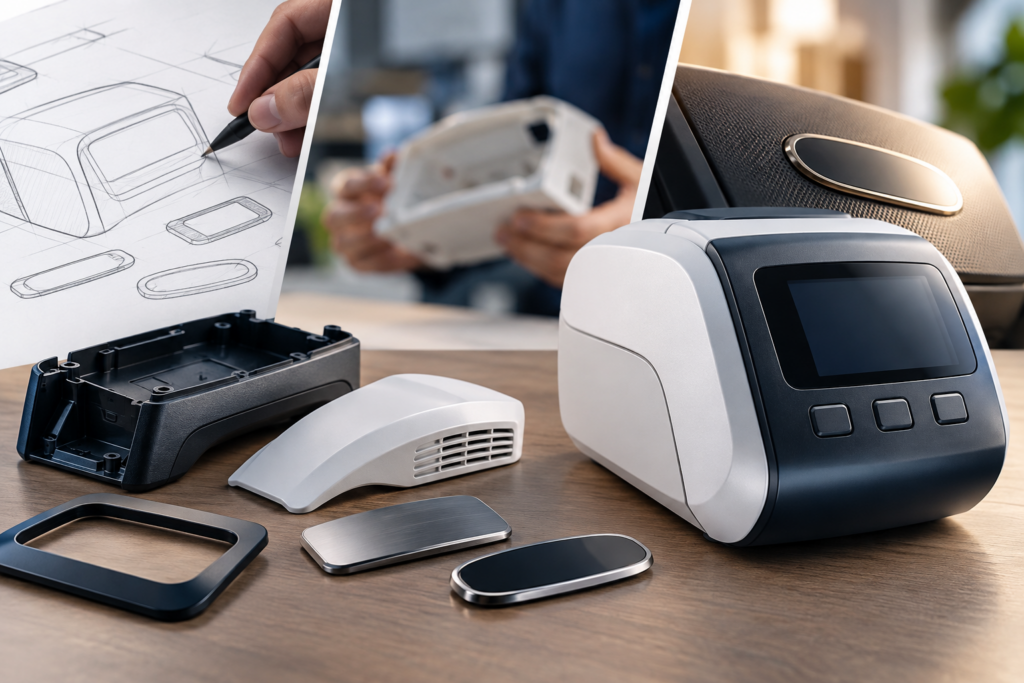
When customers interact with a product, they form opinions about its quality long before they understand how it works. The way a button feels, the appearance of an enclosure, or the finish on a nameplate can all influence how a brand is perceived.
Many companies invest heavily in product performance and visual branding, but overlook the role physical components play in shaping the customer experience. These details may seem small, yet they can influence whether a product feels reliable, professional, and worth its price.
Why Physical Components Matter to Your Brand
Brand perception isn’t built through marketing alone. It’s reinforced every time someone sees, touches, or uses your product.
Consider two electronic devices with similar functionality. One has a well-finished enclosure, responsive buttons, and a clean, durable logo. The other has inconsistent finishes, loose-fitting components, and branding that wears over time.
Even if both perform equally well, customers may perceive the first as higher quality.
Physical components help communicate the level of care and attention behind your product. When those details align with your brand’s promise, they build confidence.
Four Ways Physical Components Shape Customer Perception
1. Material and Finish Communicate Quality
The materials, colors, and textures used in custom plastic components influence how customers evaluate a product.
A smooth, consistent finish can create a refined appearance, while a textured surface may communicate durability and practicality.
The key is selecting materials and finishes that support both your product’s intended use and your brand identity.
2. Functional Components Influence User Experience
Buttons, keypads, vents, and other functional components do more than support operation. They shape how customers experience your product.
A button that responds consistently or an enclosure that feels secure can reinforce confidence in the overall design.
When these interactions feel awkward or inconsistent, customers may question the product’s quality, even when its underlying technology performs well.
3. Consistent Branding Builds Recognition
Nameplates, logos, and decorative trim help connect the physical product to your brand.
Consistent colors, finishes, and placement create a recognizable identity across product lines.
Durability matters, too. Branding that fades, scratches, or deteriorates can negatively affect how customers view a product over time.
4. Small Design Details Influence Perceived Value
It’s common to assume that improving brand perception requires a major product redesign.
Often, smaller improvements can make a meaningful difference.
A decorative bezel, distinctive texture, or better-integrated nameplate can elevate a product’s appearance without changing its core functionality.
These details help communicate thoughtful design and may strengthen perceived value.
Bringing Brand Identity Into Product Design
Physical components deserve consideration early in product development, not just during final production.
At PacTec Custom, we collaborate with customers to develop custom injection-molded enclosures, functional components, nameplates, and decorative trim that balance appearance, performance, and manufacturing cost.
Through material selection, design support, and finishing expertise, we help companies translate their brand identity into physical products.
Every Component Represents Your Brand
Your product communicates something about your company every time a customer interacts with it.
By giving physical components the same attention as performance and functionality, you can create a more consistent customer experience and reinforce the qualities you want associated with your brand.
The right components don’t just complete a product. They help shape how customers remember it.