
The Details Customers Notice First
Many teams default to focusing on performance specs, features, and price when developing a product. It’s common to assume customers primarily care about what the product does.
But what often gets overlooked is what customers experience before they ever test functionality.
The first interaction is visual. Then tactile. Then emotional.
The weight of the enclosure. The texture of a button. The finish on a nameplate. The alignment of trim pieces. These physical components quietly communicate quality, reliability, and trust.
Whether you manufacture medical devices, consumer electronics, automotive components, or lifestyle products, physical design directly shapes brand perception.
And once that perception is formed, it’s hard to change.
Why Physical Components Matter to Your Business
Brand perception is not just a marketing concept. It influences:
- Purchase decisions
- Customer loyalty
- Price sensitivity
- Distributor confidence
- Long-term reputation
If a product looks fragile, misaligned, or inconsistent, customers may assume the internal engineering is equally inconsistent. Even if the internal performance is strong, visual and tactile cues can override logic.
In our experience, this can lead to missed opportunities, especially in competitive markets where buyers compare products side by side.
The enclosure and external components are often the only parts customers ever see. That makes them critical.
4 Ways Physical Components Shape Brand Perception
1. Surface Finish Signals Quality
Finish is one of the fastest ways customers judge a product.
High-gloss surfaces suggest polish and refinement. Textured finishes can signal durability and grip. Matte surfaces often communicate modern simplicity.
Finishing techniques such as screen printing, pad printing, painting, and hot stamping allow brands to control how graphics and logos appear on the product surface .
What this means for you: inconsistent finishes, fading graphics, or poorly aligned branding can undermine trust instantly.
What often gets overlooked is durability. If logos wear off quickly or surfaces scratch easily, customers interpret that as a reflection of overall quality.
2. Material Choice Communicates Durability
It’s common to assume customers cannot tell the difference between materials. In reality, they can feel it immediately.
The rigidity of the housing. The sound it makes when set on a table. The resistance of a snap-fit closure. The tactile response of a button.
PacTec works with a wide range of materials, including ABS, PC, ASA, PE, and polypropylene, selected based on end-use requirements and environmental exposure .
If your product is used outdoors, in high-heat environments, or in medical settings, material performance directly affects how long the product maintains its appearance.
A cracked enclosure or discolored housing does more than create warranty claims. It affects brand confidence.
3. Fit and Alignment Reflect Precision
Customers notice gaps.
They notice uneven seams. Misaligned trim. Buttons that wobble. Battery doors that flex.
Injection molding, when properly engineered, allows for repeatable precision and consistent part production .
But achieving that consistency depends on thoughtful design for manufacturing and careful tooling strategy.
It’s common to assume small tolerances are “engineering details.” From a customer perspective, they’re trust indicators.
If the exterior feels tight and intentional, customers assume the internal systems are equally well designed.
4. Branding Elements Reinforce Identity
Your logo is not just decoration. It’s a signal.
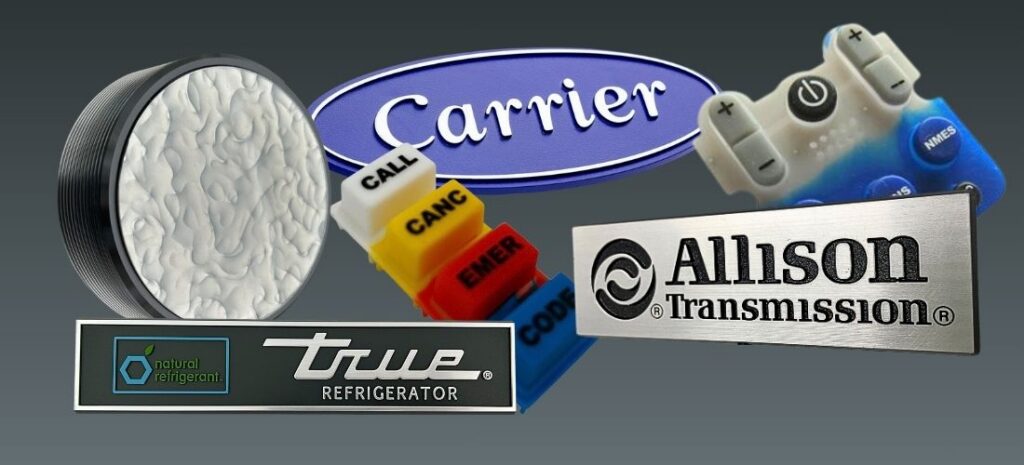
On-product branding such as molded-in logos, high-quality nameplates, and decorative trim helps products stand out in crowded markets .
For many industries, branding must also withstand harsh environments, including UV exposure and temperature extremes .
If branding fades, peels, or feels like an afterthought, it weakens your positioning.
Strong, durable branding reinforces consistency across product lines and builds recognition over time.
When Should You Prioritize Physical Brand Cues?
You should pay close attention to physical components when:
- Launching a new product line
- Repositioning your brand at a higher price point
- Entering a competitive retail environment
- Selling through distributors who compare multiple brands
- Moving from prototype to scaled production
Early-stage decisions about enclosure design, materials, finishing, and assembly often determine whether a product feels premium, practical, rugged, or disposable.
Once tooling is built, changes become more expensive and complex.
The Risk of Treating Components as Commodities
Many teams treat enclosures, trim, and nameplates as secondary to internal engineering.
In our experience, this can lead to products that technically perform but struggle to command attention or justify price.
Physical components are not just protective shells. They are brand touchpoints.
They influence how customers describe your product to others. They shape first impressions in sales meetings. They impact how confidently distributors present your offering.
Ignoring this connection can result in products that compete primarily on price rather than perceived value.
How PacTec Custom Supports Brand-Driven Manufacturing
PacTec has over 30 years of experience designing and manufacturing injection-molded enclosures, nameplates, and decorative components that meet both functional and aesthetic requirements .
Through a collaborative development process, PacTec works with customers to maintain design intent while optimizing for manufacturability, cost, and long-term durability .
That means thinking beyond simply producing parts. It means considering:
- How the product will feel in the customer’s hands
- How branding will hold up over time
- How finishes will perform in real-world environments
- How components will assemble consistently at scale
This approach helps ensure your physical product reinforces the brand reputation you’ve worked hard to build.
Final Thoughts: Your Product Is Your Brand
Brand perception is not created only by advertising, websites, or packaging.
It’s created the moment someone touches your product.
Many teams focus on messaging. What often gets overlooked is that the product itself delivers the most powerful message of all.
If you are evaluating a new design or refining an existing one, it’s worth asking:
- What does this product physically communicate about our brand?
- Does it reinforce durability, precision, and quality?
- Are we investing in the details customers will notice?
Because in the end, customers may not understand your manufacturing process.
But they will absolutely understand how your product feels.