
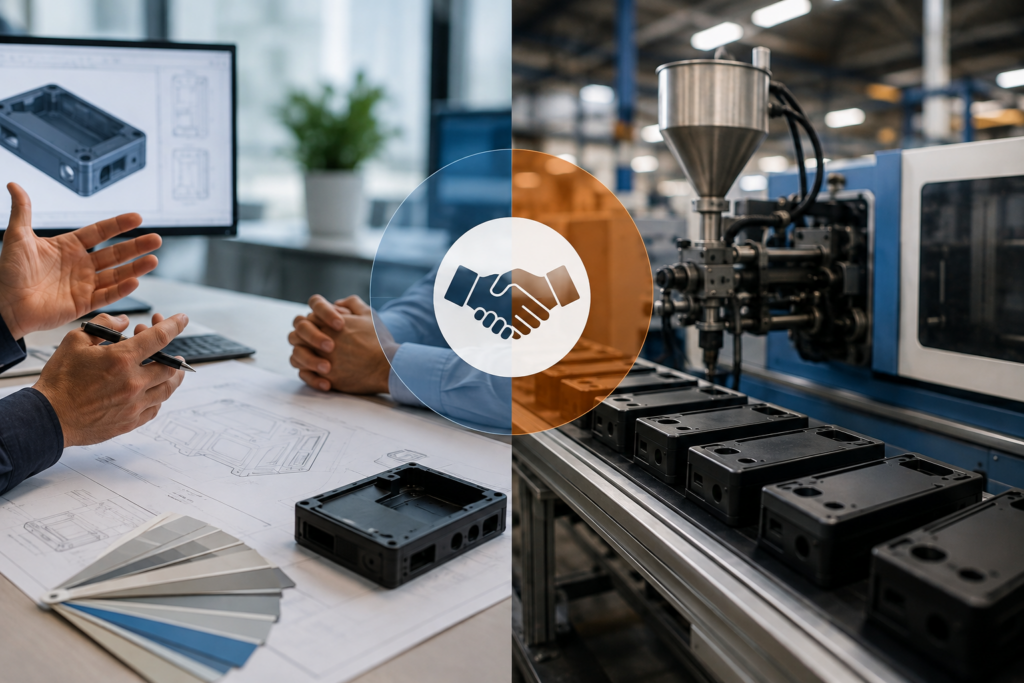
Great Equipment Is Only Part of the Equation
When companies evaluate a manufacturing partner, it’s common to focus first on equipment, capabilities, materials, and production capacity. Those things matter. But even the best machinery cannot compensate for poor communication.
A successful manufacturing project involves many decisions before, during, and after production. Designs may need to be evaluated. Materials and finishes must be selected. Timelines have to be established. Forecasts can change. Unexpected challenges may arise.
That is why communication should be considered a manufacturing capability in its own right.
Communication Helps Prevent Expensive Surprises
Many teams default to sending a design to a manufacturer and expecting production to simply follow. What often gets overlooked is how much collaboration can happen between the initial concept and the finished product.
Questions identified early can be much easier and less expensive to address than problems discovered after tooling or production begins.
A manufacturing partner should be willing to discuss how a design will be produced, understand the intended application, and identify considerations that could affect cost, quality, appearance, or timing.
At PacTec, customers work with engineers during the design and development process to help preserve design intent while considering manufacturability and cost. Communication continues as projects move toward production, with clear milestones and ongoing follow-up helping customers understand where their projects stand.
Good Communication Matters After Production Starts, Too
Communication does not stop when the first parts come off the injection molding machine.
Production requirements can change. Forecasts may increase or decrease. A rush order might appear unexpectedly. Raw material availability, inventory, finishing, assembly, packaging, and shipping can all affect when a product reaches its destination.
In our experience, sharing information early gives both the customer and manufacturer more opportunities to plan effectively.
For example, forecasts can help a manufacturing partner prepare raw materials and inventory ahead of demand. PacTec’s production approach includes material planning, production scheduling, inventory management, and logistics, with the goal of supporting both planned requirements and changing customer needs.
What Should You Expect From a Manufacturing Partner?
Before choosing a custom injection molding company, consider more than its equipment list. Ask how the company communicates throughout the life of a project.
A strong manufacturing relationship should provide:
- Clear communication from design through production
- Opportunities to discuss materials, finishes, and manufacturing considerations
- Visibility into important project milestones
- Production and inventory planning based on expected demand
- Responsiveness when requirements or schedules change
Machinery produces the parts, but people keep the project moving.
Manufacturing Is a Partnership
At PacTec, advanced injection molding equipment is an important part of manufacturing, but it works alongside experienced people and a collaborative process. With more than 30 years of injection molding experience, PacTec supports customers from design and material selection through molding, finishing, assembly, inventory, and logistics.
When evaluating your next manufacturing partner, don’t just ask what machines are on the production floor. Ask who will communicate with you when decisions need to be made.
That answer can be just as important to your project’s success.